Buying Guide:
Flamenco Shoes
Proper flamenco shoes are not a luxury—they are essential equipment. The right pair will support your technique, protect your body, and help you develop clean, powerful sound. The wrong pair can cause pain, injury, and frustration. This guide will help you make an informed, confident purchase. Below this general guide, you will find more in depth advice on 4 of the most important categories.
1. Why Regular Shoes Will Not Work
Flamenco shoes are structurally different from street shoes or character shoes. They are built to:
Withstand repeated percussive impact
Produce clear, resonant sound
Stabilize the ankle and foot
Distribute weight safely through the heel and forefoot
Dancing in the wrong footwear can lead to shin splints, knee strain, plantar fasciitis, and poor technical habits.
2. Heel Height: What Beginners Should Choose
Recommended for beginners: 4–5 cm (1.5–2 inches)
Provides stability while you learn balance and weight transfer
Reduces strain on calves and Achilles
Allows you to develop clean heel work without compromising posture
Avoid very high heels until you have strong core control and secure balance.
3. Heel Shape: Cuban vs. Carrete
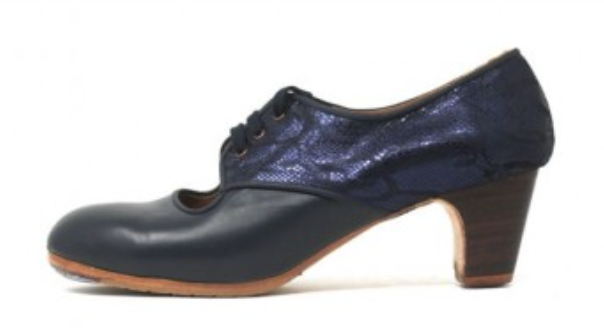
Cuban Heel (Blocky, slightly flared):
Best for beginners. Stable, shock-absorbing, and forgiving.Carrete Heel (Narrow, straight):
More advanced. Produces sharper sound but requires strong ankle control.
Start with Cuban heels unless your teacher specifically advises otherwise.
4. Nail Placement and Sound Plate
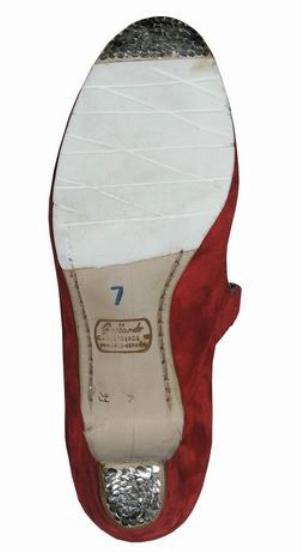
Good flamenco shoes have even spacing of nails for balanced sound.
Avoid shoes where nails are only decorative or loosely set.
5. Leather Type
Upper leather:
Suede (ante): Softer, molds to the foot, good for comfort
Smooth leather (piel): More durable, slightly stiffer, holds shape longer
Sole:
Must be hard leather, not rubber
Should allow some flex at the ball of the foot but remain firm under the heel
6. Fit: The Most Important Factor
Flamenco shoes should fit snugly, like a glove.
No sliding at the heel
Toes should be fully supported, not curled
Leather will stretch slightly; they should feel tight at first but not painful
You should be able to demi-plié without your foot lifting out of the shoe
Never size up “for comfort.” Loose shoes destroy sound quality and increase injury risk. It is possible to buy an insert to put inside the shoe in front of your big toe if you have one foot shorter than the other, but buy the bigger size to match your longer foot. I experienced a foot injury a few years back because my shoes were just a bit too tight. Pay attention to the sizing guides provided when ordering shoes online.
7. Closure Style
Laces: Most secure; excellent for beginners
Single or double strap (correa): Elegant and traditional
Stability is more important than aesthetics at the beginning.
8. Weight of the Shoe
A proper flamenco shoe will feel heavier than normal dance shoes.
The weight helps generate sound
It trains the legs correctly for zapateado
Extremely light shoes usually indicate poor internal construction
9. Brands with Reliable Quality
While many exist, consistently respected brands include:
Begoña Cervera
Gallardo
Senovilla
Don Flamenco
Artefyl
When ordering online, always check return policies and sizing charts carefully.
I have personally used Senovilla, Artefyl, and Don Flamenco and I love them all. I used Roberto Garrudo until I was ready for a professional quality shoe—I had a pair of Garrudos that never broke in and were stiff and had terrible sound (they were supposed to be professional quality). They had a ton of padding in the foot—I later realized it isn’t necessary for comfort. I didn’t have an issue with my first student pairs I bought from Garrudo breaking in, but now when I use them my back and knees hurt due to lack of support.
10. Budget Expectations
A quality pair typically ranges from $120–$220 USD.
Anything significantly cheaper often sacrifices:
Sound plate quality
Nail durability
Structural support
Think of flamenco shoes the way a runner thinks of professional running shoes: they are an investment in your body and your progress.
11. When to Replace Your Shoes
Signs it is time for a new pair:
Heel sound becomes dull or uneven
Sole feels soft or unstable
Heel begins to wobble
Leather has overstretched and no longer holds the foot
Most students replace shoes every 12–24 months depending on practice frequency.
Final Advice
Your shoes are your instrument.
They shape your sound, your posture, and your long-term physical health.
When in doubt, ask your teacher before purchasing. The right shoes will make learning flamenco not only safer—but far more satisfying and musical from your very first class.